Walmart Offers Talking Prescription Containers to Customers with Visual Impairments

The Walmart press release posted here announces a pilot program in which Talking Prescription Containers will be available for blind Walmart customers across the country through Walmart mail order, and also for blind customers at three Walmart stores. This is the first time in the United States that a national pharmacy retailer has piloted talking prescription technology on a national basis. Wal-Mart is working with En-Vision America, maker of the ScripTalk talking prescription program. Read more… Walmart Offers Talking Prescription Containers to Customers with Visual Impairments

Global Accessibility Awareness Day Highlights Digital Inclusion

May 9, 2012 marks the first Global Accessibility Awareness Day. On this day designed to raise awareness of the need for digital inclusion, the Law Office of Lainey Feingold recognizes the large United States institutions that have committed to accessibility through the Structured Negotiations process. The entities have worked with the blind community to improve accessibility to their websites and other technologies. They have recognized the importance of inclusion and have done so in a collaborative and solution-driven way. Read more… Global Accessibility Awareness Day Highlights Digital Inclusion

Charles Schwab Website Accessibility Press Release

Charles Schwab & Co., Inc. today announced an initiative to make its website more accessible and inclusive for all customers. Schwab’s initiative will particularly improve the client experience for Schwab customers with disabilities. Schwab has adopted the Web Content Accessibility Guidelines (WCAG) version 2.0 level AA as its website accessibility standard and has begun working to meet this standard. Read more… Charles Schwab Website Accessibility Press Release

Central and West Java in Indonesia gets First Talking ATMs

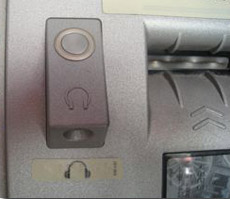
International Talking ATM installations remind us that advocacy work done in one country can have ripple affects across the globe. ATM manufactures distribute their technology around the world, and slowly, slowly this technology is becoming more accessible everywhere. Today’s news brought word of the first Talking ATMs in Semarang, Central Java and Surabaya in East Java, Indonesia. The full news report, which first appeared in the Jakarta Post, is reprinted below. Visit the International Issues Category of LFLegal for more stories of Talking ATM installations outside the United States. Read more… Central and West Java in Indonesia gets First Talking ATMs

John Slatin AccessU 2012

Lainey Feingold will be presenting at John Slatin AccessU 2012, to be held this year in Austin on May 15-17. AccessU, a project of Knowbility, is a two day intensive training conference for web developers and designers, usability professionals, and pretty much anyone who wants to learn the ins and outs of all aspects of web accessibility. Lainey will be doing a session for conference participants on legal issues surrounding web accessibility. Web accessibility is a civil right, and the law is a useful key to unlock doors that might otherwise be closed to accessibility. You’ll find out how and why at this session. Read more… John Slatin AccessU 2012

Proposed Regulations Address Airline Websites and Kiosks

The United States Department of Transportation issued a press release on September 19, 2011 announcing proposed regulations on airline websites and airline kiosks. The proposed rules would require most airlines to have accessible websites within two years of any final regulation (which could be several years from now if at all). The proposal, if enacted, would also require kiosks purchased after any final regulation to meet accessibility standards. The full text of the announcement is in this post. The DOT’s proposed regulations come as the appeal is pending in two California lawsuits against airlines for failure to maintain websites and kiosks that persons with visual impairments can use. Read more… Proposed Regulations Address Airline Websites and Kiosks
American Cancer Society Information in Braille, Large Print, Audio Formats and Accessible On-Line

Last month, the American Cancer Society (ACS) announced a comprehensive initiative to improve access to its materials by people with visual impairments. Using the alternative dispute resolution method known as Structured Negotiations, ACS worked with the American Council of the Blind (ACB) to improve the accessibility of its website and to develop a pilot program for providing accessible information. As described in this post, print information is now available in Braille, Large Print, mp3, audio CD and accessible electronic formats. Access to information is a civil right and is key to full inclusion of people with disabilities into modern society. Please share this post and help spread the word about the availability of cancer-related information in formats that people who are blind and visually impaired can read. Read more… American Cancer Society Information in Braille, Large Print, Audio Formats and Accessible On-Line

Spring 2011 Conference Presentations

In the Spring of 2011 Lainey Feingold will be speaking at three technology and disability conferences: the 2011 International Technology and People with Disabilities Conference (CSUN) in San Diego, the Conference on Employment and Visual Impairment sponsored by the Computer Center for Visually Impaired People (CCVIP) at Baruch College in New York City, and the John Slatin AccessU 2011 sponsored by Knowbility in Austin, Texas. In this post you can read about and find links to each of these conferences. Read more… Spring 2011 Conference Presentations

World Braille Day Question: Is your Information Accessible?

January 4, 2011 marks the 202d birthday of Louis Braille. The milestone is celebrated throughout the world: World Braille Day across the globe, National Braille Week in the UK, National Braille Literacy Month in the United States. In an era when access to information grows increasingly important, the birth of the founder of Braille is certainly worth celebrating. But thinking about Braille is also sobering. Despite strong civil rights laws guaranteeing effective communication to people with visual impairments, too much critical information is not available in Braille for those who need it. Read more… World Braille Day Question: Is your Information Accessible?