Blind Does not Mean Oblivious

On June 16, 2015 the New York Times ran an article in the Science Section about childhood obesity. The piece was about parents who deny that their kids are obese, thereby fueling what the Times terms the “childhood obesity epidemic.” What headline did the nation’s paper of record chose for this article in the print edition? The editors chose the headline “Blind to a Child’s Obesity.” The parents (and grandparents) featured in the piece were all sighted, and so were their kids. “Blind” was the Times’ way of saying that these parents were oblivious, ignorant, and didn’t have their children’s best interests at heart. Read more… Blind Does not Mean Oblivious

Humana Talking Prescription Label and Accessible Information Settlement Agreement.
The settlement agreement posted here was reached through Structured Negotiations, an alternative dispute resolution process that focuses on collaboration and solution without lawsuits. Working with the American Council of the Blind and blind Humana customers in Structured Negotiations, Humana agreed to provide talking and braille prescription labels to allow blind people and others with print disabilities to access important health and safety information on prescription labels. Read more… Humana Talking Prescription Label and Accessible Information Settlement Agreement.

Kitty Cone, Progressive Activist and Disability Rights Leader, Dies at 70
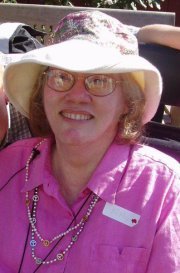
Kitty Cone’s final Facebook post was dated February 14, 2015. “Excellent explanation of dangers of fracking,” she wrote above a Sierra Club video explaining the dirty energy process. It was a fitting social media ending for the life long activist who died on March 21, 2015 at the age of 70. With Kitty’s death the world has lost a fighter for social justice and a woman of fierce commitment to progressive ideals and to equality in all it forms. Her family has lost a beloved member, her son Jorge a wonderful mother. I and countless others have lost a loyal, supportive, kind friend. Read more… Kitty Cone, Progressive Activist and Disability Rights Leader, Dies at 70

Caremark Offers Talking Prescription Labels, Braille, Large Print

Congratulations CVS Health! Today the largest integrated pharmacy company in the United States announced that is now offering talking, braille and large print prescription labels through its mail service pharmacy, commonly known as Caremark. The labels are available to Individuals with vision impairments. This important health, safety and accessibility initiative was reached as a result of a collaboration with the American Council of the Blind and several blind Caremark members. The press release below, announcing the initiative, expands CVS Health’s commitment to its blind members across the country. Read more… Caremark Offers Talking Prescription Labels, Braille, Large Print

Separate is Not Equal: Good News for Grocery Delivery

On February 26, 2014, Safeway took an important step in meeting its goal of a fully usable digital experience for all customers. In a banner posted on its grocery delivery site, Safeway announced it was eliminating the separate text-only website it had maintained for many years. Eliminating the text-only site is part of Safeway’s commitment to making its main site accessible to all users. Read more… Separate is Not Equal: Good News for Grocery Delivery

Spring 2014 Conference Presentations

Lainey Feingold will be giving two presentations at the 29th Annual International Technology and Persons with Disabilities Conference in San Diego, California in March. She will also be presenting at the John Slatin AccessU Conference in Austin, Texas in May. Want to learn more about the law impacting digital accessibility or the collaborative process known as Structured Negotiations? This post provides the details of these conference presentations. Read more… Spring 2014 Conference Presentations
The Digital Divide and People with Disabilities

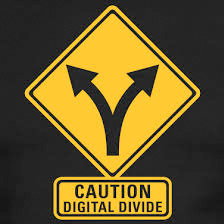
On August 23, 2013, the New York Times published my letter to the editor about the digital divide and people with disabilities. The letter was in response to an an extensive article published by the Times on August 19, 2013, titled “Most of U.S. Is Wired, but Millions Aren’t Plugged In.” The article, based on a recent report by the U.S. Commerce Department, noted that “tens of millions of people are still on the sidelines of the digital revolution” and it went on to discuss the digital divide caused by various demographics including age, race, geography, education and class. Missing entirely from the Times’ article – disability and the digital divide. Read more… The Digital Divide and People with Disabilities

Landmark Victory for Blind Advocates in Hungary: CRPD means Talking ATMs

Szilvia Nyusti and Péter Takács are blind advocates in Hungary who wanted their bank (the largest bank in their country) to install Talking ATMs. After all, they paid the same fees as sighted customers, why shouldn’t they have the same access to services and technology? After a five year legal battle in Hungary, they took their claims to the United Nations. On May 16, 2013, the UN Committee on the Rights of Persons with Disabilities issued an historic ruling finding that Hungary violated the UN Convention on the Rights of People with Disabilities (CRPD) by failing to ensure that Hungarian banks had Talking ATMs. Congratulations to Szilvia and Peter. Congratulations to the United Nations. Congratulations to the CRPD for working as it should in protecting the rights of people with disabilities. Shame on the United States for failing to ratify the treaty. Read more… Landmark Victory for Blind Advocates in Hungary: CRPD means Talking ATMs

G is for Global: Tribute to Global Accessibility Awareness Day 2013

On May 9, 2013 people around the world will be gathering for workshops, seminars and other events to celebrate and recognize the second annual Global Accessibility Awareness Day, or GAAD. As explained on the GAAD Facebook page, the day is a community-driven effort whose goal is to focus one day to raise the profile of digital (web, software, mobile app/device, touch screen kiosk, etc.) accessibility and people with different disabilities. The Law Office of Lainey Feingold’s legal practice is entirely focused on digital accessibility, and this post is my tribute to the wonderful idea that is Global Accessibility Awareness Day. Congratulations to the grassroots community that is growing GAAD and especially to accessibility activist extraordinaire Jennison Asuncion whose enthusiasm and commitment is significantly responsible for the tremendous growth of this day of awareness. Read more… G is for Global: Tribute to Global Accessibility Awareness Day 2013

ARCHIVED: Accessibility Statements Show Commitment to all Site Users

Last updated January 27, 2021 to add the new White House website statement. An important component of any Structured Negotiations settlement agreement involving web accessibility has been a company’s commitment to maintain an Accessibility Statement (previously called an Accessibility Information Page, or AIP. The ideal page has details about the company’s web accessibility policy, details about other accessibility services, and a phone and web-based method for the public to forward accessibility concerns, both positive and negative. The page should be easy to find on the site, preferably linked from the home page and all page footers, and searchable through the site search engine. Accessibility Statement resources and Statements of some of the largest entities in the United States are included in this article. Read more… ARCHIVED: Accessibility Statements Show Commitment to all Site Users