Have You checked your ACCESSIBLE Credit Reports?

The three major credit reporting companies in the United States have been making free credit reports accessible for almost two years. As the holiday season approaches it is a great time to review your report — in Braille, Large Print or audio format, or on the web in an accessible on-line format. Every United States citizen is entitled to one free report every twelve months from each of the three companies: Equifax, Experian and Trans Union. The three reports can be requested at the same time, or at different times over a twelve month period. This post has details about how to request free accessible credit reports. Read more… Have You checked your ACCESSIBLE Credit Reports?

Almost home: Senate Unanimously Passes Accessibility Bill

The Twenty First Century Communications and Video Accessibility Act is one step closer to becoming the law of the land. Before adjourning for summer recess on August 5, 2010, the United States Senate passed S. 3304 by unanimous consent. Advocates expect the bill to be on President Obama’s desk for signature soon. The Law Office of Lainey Feingold congratulates all the individual advocates and advocacy organizations that comprise the Coalition of Advocates for Accessible Technology (COAT) who made this historic bill a reality. Read more… Almost home: Senate Unanimously Passes Accessibility Bill

ADA Twentieth Anniversary Rule Making from Department of Justice

Breaking News Update! The U.S. Department of Justice has published Advanced Notices of Proposed Rulemaking (ANPRM) on four issues of importance to the disability community. Earlier News Update! The U.S. Department of Justice has announced that on July 26 it will issue Advanced Notices of Proposed Rulemaking (ANPRM) on four issues of importance to the disability community. The Notices will address web accessibility for entities covered by the ADA, movie captioning and video description, accessibility of next generation 9-1-1, and accessibility of equipment and furniture in covered entities. Read more… ADA Twentieth Anniversary Rule Making from Department of Justice

Talking ATMs in the Philippines: Perfect ADA Anniversary Story

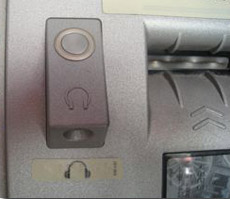
Posted here is a news report from the Philippines about a legislative push for Talking ATMs in that country. Reading this news on the eve of the 20th anniversary of the Americans with Disabilities Act is fitting. Although the law being celebrated this month is focused on “Americans”, disability advocacy in one part of the globe often has ripple affects across the world. Today we have a global economy and multi-national corporations. We also have global advocacy and international advances in disability access. Especially when it comes to accessible technology. Read more… Talking ATMs in the Philippines: Perfect ADA Anniversary Story

Federal Appeals Court Victory for Blind Movie Goers

[quote from=”Ninth Circuit Opinion in State of Arizona v. Harkins”]We disagree with Harkins that captioning and descriptive narration fall outside the ADA as a matter of law. As stated previously Plaintiffs are seeking an auxiliary aid, which is specifically mandated by the ADA to prevent discrimination of the disabled.[/quote]Great news for visually impaired movie goers! On April 30, 2010 the Ninth Circuit Court of Appeals in San Francisco ruled that audio description is “clearly” an “auxiliary aid and service” under the Americans with Disabilities Act. This ruling revives an Arizona lawsuit against the Harkins movie theater chain that had been thrown out of court in 2008. The plaintiffs can now continue their case against the Harkins chain for the company’s failure to provide audio description at its theaters. The case can also go forward on claims brought by deaf and hearing impaired theater-goers for captioning. Read more… Federal Appeals Court Victory for Blind Movie Goers

San Francisco – National Leader in Installing Accessible Pedestrian Signals

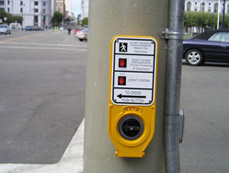
SFMTA Expands APS Program Accessible Pedestrian Signal Program Receives Stimulus Funds San Francisco (March 24, 2010)–The San Francisco Municipal Transportation Agency (SFMTA), which oversees all surface transportation in San Francisco including the Municipal Railway (Muni), today announced that the City has received federal stimulus funds that will equip five additional intersections with Accessible Pedestrian Signals (APS). In the City 116 intersections have been equipped with the devices over the past two and a half years, making San Francisco the national leader on this important safety issue. Read more… San Francisco – National Leader in Installing Accessible Pedestrian Signals

Iris Scanner Protects Medical Records – But What if You Don’t Have an Iris?

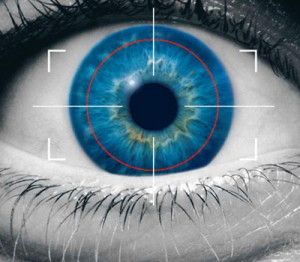
On March 15, 2010 CNN posted an article about the use of iris scanners in a low income Bronx health clinic to prevent mix-ups among the patients. The high tech iris scanner, usually seen only in airport security systems, is an important and useful tool for the Bronx clinic, and a welcomed one in an under-served community. At the same time, this article is yet another reminder that technology advances in the health field have the potential to leave people with disabilities behind. If you don’t have an iris, an iris scanner cannot help you. Read more… Iris Scanner Protects Medical Records – But What if You Don’t Have an Iris?

Web Accessibility Press Coverage on New Year’s Day

Web more accessible to those with disabilities (article appearing on page 1 of the San Francisco Chronicle on January 1, 2010, by staff writer Alejandro Martínez-Cabrera) San Francisco, CA (January 1, 2010)– During her high school years, Lisamaria Martinez, who has been visually impaired since she was 5, carried a 25-pound backpack to school crammed with books written in Braille. But once she was introduced to the Web at UC Berkeley, she started getting professors’ class notes by e-mail, using text-to-speech software, and trading heavy Braille tomes for a few words and a click on a search engine. Read more… Web Accessibility Press Coverage on New Year’s Day

Civil Rights Clearinghouse Includes Structured Negotiations Settlements

The Law Office of Lainey Feingold is pleased to announce that The Civil Rights Litigation Clearinghouse is now posting settlement agreements reached using Structured Negotiations. The Clearinghouse web site is a collection of documents and information about civil rights cases from across the United States organized in selected case categories. Its goal is to allow “greater understanding” of the importance of civil rights litigation in this country. Read more… Civil Rights Clearinghouse Includes Structured Negotiations Settlements

Pakistan ATM Advocacy: Blind Community Success

In August of this year, blind advocates in Pakistan demanded an end to widespread discrimination against blind people by the banking industry in that country. Their advocacy has paid off. In early December 2009, the Islamabad-based International News and The Nation published articles, posted here, with the headlines “Banks directed to permit blind people to open accounts” and “Ministry to install ATMs for visually impaired.” The articles report that all banks in Pakistan will now be required to allow blind citizens to open their own bank accounts and will issue information in Braille to facilitate banking independence. And, for the first time, Talking ATMs are being planned for installation in Islamabad. Efforts to end discrimination in Pakistan against people with disabilities in insurance and micro-lending are also underway. Read more… Pakistan ATM Advocacy: Blind Community Success