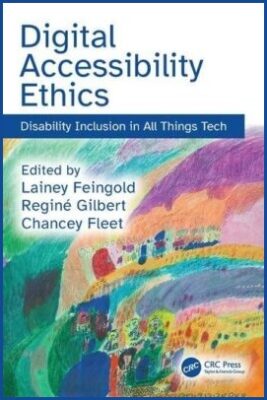
Digital Accessibility Ethics: Disability Inclusion in All Things Tech is an edited collection written by 39 authors from 10 countries with over 600 years of accessibility and disability experience. It introduces the first Digital Accessibility Ethics Framework, a values-driven actionable strategy with two goals: (1) advance digital accessibility across sectors and (2) help disabled people and organizations avoid the risks and harms of disability exclusion in tech.
This book is a must read for lawyers, law professors, law students, mediators, court administrators, and just about everyone in the legal profession.
Why?
- Digital accessibility is a legal requirement in an increasing number of countries across the globe. The book includes interviews with lawyers and others with legal expertise from Ethiopia, India, Japan, Kenya, Sweden, Australia, Canada, and the United States. An overview of global accessibility laws and standards is part of the collection.
- If legal tech is not accessible, disabled law students, lawyers, legal professionals, judges and others face barriers to full inclusion in the profession.
- Without digital accessibility, there is no access to justice for 1.3 billion people across the globe with disabilities.
- Digital accessibility is essential to a lawyer’s ethical obligation to communicate with clients and potential clients and protect client privacy and confidentiality.
- If the legal profession fails to incorporate digital accessibility best practices when purchasing, leasing, or creating technology, including AI-based tools, lawyers bring broken things into the workplace, the mediation room, or the courthouse.
- Online Dispute Resolution (ODR) excludes people (including mediators, judges, lawyers, clients, and/or the public) when digital accessibility is lacking.
- Lawyers in many different fields and roles need to understand the digital accessibility legal space to ethically and responsibly advise their clients. This includes in-house counsel, corporate and government counsel, disability rights lawyers, healthcare counsel, and many others.
Sample chapters that the legal profession needs
Below is a sampling of just some of the chapters with crucial information for the legal profession. Find the full table of contents here. Information about all authors and editors can be found here.
- Introducing the Digital Accessibility Ethics Framework (Chapter 1 by the editors)
- The Ethical Dilemmas of Artificial Intelligence (Chapter 3 by Jutta Treviranus)
- The Global Digital Accessibility Legal Landscape (Chapter 4 by Lainey Feingold)
- Don’t Buy Broken Things: Ethical, Accessible Procurement (Chapter 9 by Sheri Byrne-Haber)
- Secure by Design, Accessible by Default: Building Cybersecurity Ethics that Include Everyone (Chapter 21 by Aliyu Yisa and Justin Merhoff)
- Tech-Facilitated Disability Discrimination and Artificial Intelligence Tools (Chapter 24 by Ariana Aboulafia)
- Legal Ethics, Access to Justice, and the Need for Digital Accessibility (Chapter 32 by Lainey Feingold)
Where to find Digital Accessibility Ethics: Disability Inclusion in All Things Tech
- The book is available in print and digital formats through Amazon and other book-selling platforms across the globe. The audio book is underway.
- CRC Press, part of the Taylor & Francis Group, is the publisher of Digital Accessibility Ethics: Disability Inclusion in All Things Tech. You can find the book on the publisher’s website here.
- The book is available in Bookshare and other libraries for people with print disabilities. The direct link to the book for Bookshare members is here.
- Your library? We’d love to see the digital accessibility ethics book in law, university, law firm, and public libraries.
Want to read the book in a group?
- Reading Digital Accessibility Ethics: Disability Inclusion in All Things Tech in a group setting extends the global collaboration of its 39 authors.
- In the first three months since publication, the editors and authors have been invited to 3 book groups. Reading with others sparked great conversation and created moments of unexpected connection.
- The publisher offers a discounted price for groups of 5 or more who want to read the book together.
Want to learn more?
- Visit our website at AccessibilityEthics.org
- Authors and editors are available for talks, trainings, webinars, podcasts, conferences and other gatherings. Reach out to us by email at Info [at] AccessibilityEthics [dot] org to explore different ways your organization can learn more about Digital Accessibility Ethics: Disability Inclusion in All Things Tech.
Images from Chapter 32: Legal Ethics, Access to Justice, and the Need for Digital Accessibility
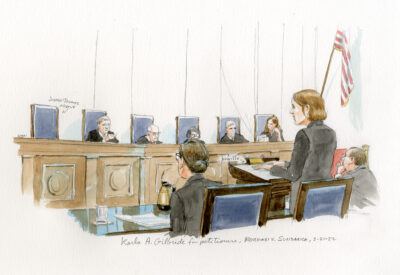
Images in Digital Accessibility Ethics: Disability Inclusion in All Things Tech enhance the content in many chapters. Here are images from Chapter 32, titled Legal Ethics, Access to Justice, and the Need for Digital Accessibility:

Ayuka Ide, a smiling, sociable 11-year-old Japanese girl during her lifetime. Ayuka’s parents’ wrongful death lawsuit, brought by a team of disabled lawyers, was the first case in Japan to establish that a child’s disability should not reduce the amount awarded to grieving parents.