
Blind Advocacy for Accessible Technology Has Rich California History
October 10 – 16, 2010, has been designated by the California legislature as the state’s first ever “Disability History Week.” The official designation is the result of disability community advocacy efforts spearheaded by “Youth Organizing! Disabled and Proud”, a project of the the California Foundation for Independent Living Centers. This historic week provides a welcomed opportunity to look at the history made by blind advocates and their organizations in California as part of the on-going push for accessible technology. Read more… Blind Advocacy for Accessible Technology Has Rich California History

Court Injunction Requires Access to Paper Currency
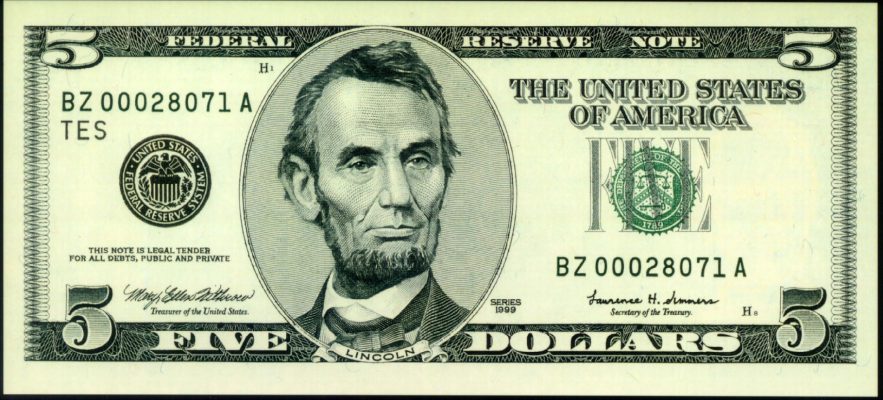
On Friday, October 3, 2008, U.S. District Court Judge James Robertson issued an historic injunction against the United States Treasury. In a case brought by the American Council of the Blind (ACB) and blind advocates, Judge Robertson held that the Treasury “violated Section 504 of the Rehabilitation Act by failing to provide meaningful access to United States currency for blind and other visually impaired persons.” The Treasury was ordered to take steps to make United States currency accessible to people who are blind. Washington, D.C. lawyer Jeff Lovitky handled the case for ACB. Read more… Court Injunction Requires Access to Paper Currency

Lainey Feingold to receive AFB Access Award
Lainey and co-counsel Lainey and co-counsel Linda Dardarian are being honored on April 4 at the 2008 National Conference of the the American Foundation for the Blind (AFB). Lainey and Linda will receive one of AFB’s three 2008 Access Awards for their pioneering work in resolving complex accessible technology claims without litigation. Technology developers Serotek and Code Factory will also receive Access Awards, and Anita Aaron, Executive Director of the San Francisco LightHouse will receive the organization’s Gallagher Award. Read more… Lainey Feingold to receive AFB Access Award

GAAD 2014: People are Different and We All Use Technology. Why Isn’t More of it Accessible?
May 15 2014 is the third annual Global Accessibility Awareness Day, or GAAD. The day was conceived by Los Angeles web developer Joe Devon and accessibility virtuoso Jennison Asuncion. Virtual and live events are being held around the globe to bring attention to a simple idea: People are different, and we use digital devices and consume digital content in different ways. Read more… GAAD 2014: People are Different and We All Use Technology. Why Isn’t More of it Accessible?

Can’t Someone Read that to You? Dissolving Stereotypes of Blindness

On June 25, 2013, the World Intellectual Property Organization (WIPO), an agency of the United Nations, reached agreement on an historic document designed to provide access to reading materials for people who are blind or have other print disabilities. The draft WIPO treaty changes copyright law to reflect that blind people need formats other than standard print in order to read. These alternative formats, or accessible formats, include Braille, audio, Large Print, accessible web content and other accessible electronic documents. The lack of accessible, available formats, and not blindness, is why blind people cannot read huge swaths of information available in standard print format. The need for accessible information has been at the core of many of the settlement agreements reached as a result of Structured Negotiations. Many of those negotiations began with stereotypes about blind people and their right, desire, and need to read independently. Read more… Can’t Someone Read that to You? Dissolving Stereotypes of Blindness

Web Accessibility Report includes Lainey Feingold’s Law Office Web Site

The Law Office of Lainey Feingold is pleased to announce that this web site has been included in the web accessibility implementation report issued as part of the Web Content Accessibility Guidelines (WCAG) 2.0 implementation process. The process is an international, multi-year effort to revise the accessibility standards for web sites. Details of the current status of the implementation process are at the end of this post. Read more… Web Accessibility Report includes Lainey Feingold’s Law Office Web Site

Credit Reports Now Accessible

Effective December 17, 2008, people who are blind or visually impaired can obtain their free annual credit reports in accessible formats. As a result of an agreement signed earlier this year by the American Council of the Blind, the California Council of the Blind, and others, credit reports are now available in an accessible format… Read more… Credit Reports Now Accessible

2008 Structured Negotiations Highlights

2008 was the 14th year that Structured Negotiations were used to resolve class-wide disability access claims without litigation. This year, the Law Office of Lainey Feingold and co-counsel Linda Dardarian negotiated five new agreements using the Structured Negotiations process, and Lainey and co-counsel Amy Peterson of Equip for Equality in Illinois negotiated one new agreement. Linda and Lainey continued monitoring agreements signed in previous years, and were also involved in other Structured Negotiations that we hope will result in settlement agreements in 2009. Read more… 2008 Structured Negotiations Highlights