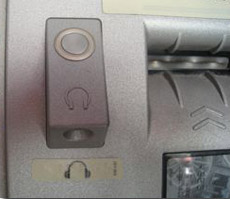
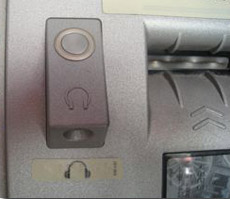
ATMs are 50 Years Old; They’ve Been Talking for 20

This month marks the 50th anniversary of the first Automated Teller Machine. The first ATM in the world was installed at a Barclays Bank branch in London on June 27, 1967. The first ATM in the United States was installed two years later at a Chemical Bank branch in Long island, New York. For 30 years ATMs remained off-limits to blind people, who couldn’t use the interactive, visual screens. It was not until October of 1997 that the world was introduced to the very first Talking ATM. It all happened because of disability community advocacy. And it’s a good reminder that today, 50 years after that first ATM, all technology should be born accessible. Read more… ATMs are 50 Years Old; They’ve Been Talking for 20

Agreement Between Mass. Eye and Ear and Bay State Council of the Blind

The agreement posted here is the result of a collaboration to improve accessibility for blind and visually impaired people at the world’s largest vision and hearing research center. Mass. Eye and Ear and the Bay State Council of the Blind, an affiliate of the American Council of the Blind, worked in Structured Negotiation together. The… Read more… Agreement Between Mass. Eye and Ear and Bay State Council of the Blind

Mass. Eye and Ear, Bay State Council of the Blind Launch Collaboration

Mass. Eye and Ear Launches Collaboration with Bay State Council of the Blind to Improve Access. January 24, 2017 (Boston) – In partnership with the Bay State Council of the Blind, Massachusetts Eye and Ear today announced the launch of a comprehensive initiative to ensure that persons with visual disabilities have full and equal opportunity to the best possible care. Issues addressed in the initiative include web accessibility, alternative formats, and training. Read more… Mass. Eye and Ear, Bay State Council of the Blind Launch Collaboration

Digital Accessibility Legal Update (December 2014)

This post is about recent legal developments in the United States impacting technology and information access for people with disabilities. It contains developments ocurring between July 16 and December 15, 2014 and is part of an occasional series. The series is illustrated by a toolbox — because law has proven an effective tool in improving the accessibility and usability of digital content, print information and technology for everyone. There are many ways to use the law, reflected by the many tools in the toolbox. Read more… Digital Accessibility Legal Update (December 2014)

Talking ATMS: Ten Years of Accessible Banking Technology

The press release posted here was issued by the American Council of the Blind to recognize October 1, 2009 as the tenth anniversary of the first Talking ATM in the United States. As a result of extensive advocacy by the blind community and industry effort, it is estimated that there are now close to 100,000 Talking ATMs in the U.S. and around the world. Congratulations to the blind and visually impaired community for this accessible technology milestone. Read more… Talking ATMS: Ten Years of Accessible Banking Technology

Why a Dolphin?

My website just got a refresh and a dolphin swam into the header. Did I convert my law practice to an aquarium? Did I move to Miami? I did not. Many people think lawyers should act like sharks. I have chosen the dolphin instead. Dolphins collaborate and have good communication skills. That’s the kind of lawyer I try to be. Read more… Why a Dolphin?

Structured Negotiation Helps Parties Focus on Accessible Tabletop Kiosks

In January, 2018 the Applebee’s restaurant chain, kiosk maker E la Carte, Inc., and the National Federation of the Blind and LightHouse for the Blind and Visually Impaired announced a partnership. The collaboration worked to make E la Carte’s table-top ordering and payment kiosk accessible to blind people. The system is used in Applebee’s restaurants… Read more… Structured Negotiation Helps Parties Focus on Accessible Tabletop Kiosks

Digital Accessibility Legal Update: ADA Anniversary Edition

[This post updated August 2020] July 26 marks the 30th anniversary of the Americans with Disabilities Act. The ADA was passed just one year after Sir Tim Berners-Lee invented the world wide web. In 1990 when then-president George Bush signed the law there were exactly zero websites. Two years later there were ten. And today? Over 1,786,367, 115. Because of the brilliance of the disability organizers and bill drafters, the ADA has provided a strong foundation for advancing accessibility in the digital world. Read more… Digital Accessibility Legal Update: ADA Anniversary Edition