Articles
This page has short summaries of every article posted on Lainey Feingold's website with links to the full articles. Visit the Topics Page for all 300 plus articles on this website organized into 38 topics including Structured Negotiation and digital accessibility.
The articles here are in chronological order, arranged by the date of publication or the date of the most recent Update when an article has been updated. Most recent articles and updated articles appear first on this list.
When an Article is updated there is a link to the Updates right below the the summary of the page.
On June 8 Walmart announced that it is now providing the ScripTalk Talking Prescription Containers free of charge to persons with visual impairments as part of a pilot program. The ScripTalk Talking Prescription program is being offered to customers across the country through Walmart mail order, and also at three Walmart stores. Read the Walmart…
Read more… How to Order Walmart Talking Prescription Containers
Those who believe that web content should be available to everyone regardless of disability received welcomed news on Tuesday, June 19. On that day, a federal district court judge in Massachusetts held that the Americans with Disabilities Act (ADA) applies to web-only businesses. The ruling came in a case brought by the National Association of the Deaf (NAD) against Netflix for the streaming video giant’s faiure to provide closed captioning on most of its “Watch Instantly” programming streamed on the Internet.
Netflix had tried to get the case thrown out of court, arguing that the ADA only applies to physical places, and not to a web-only operation like Netflix’ streaming video service. The Judge rejected this argument, and the case will now move forward. The U.S. Department of Justice also played a significant role by entering the case in support of the plaintiffs’ position.
Read more… Federal Judge Rules that ADA Covers Web-only Businesses
The article posted here about NCR’s Talking ATMs in India first appeared in the Hindu Business Line. The Law Office of Lainey Feingold, and Linda Dardarian, first engaged with NCR in the mid-1990’s as the Talking ATM initiative was getting underway in the United States. This story about NCR’s Talking (and solar-powered!) ATMs demonstrates yet again that accessibility is an international issue. Accessible technology that starts in one country is bound to make its way around the world. The technology corporations are global, advocacy needs to be too. Blind advocates are not mentioned in the story below, but no doubt they played an important role in efforts to bring independent access to financial services to India.
Read more… NCR Installs Additional Talking ATMs in India (with solar power option too!)
CINEMARK ANNOUNCES GREATER MOVIE THEATRE ACCESSIBILITY FOR CUSTOMERS WHO ARE BLIND AND VISUALLY IMPAIRED
Cinemark LogoSeptember 27, 2012 – Plano, Texas Cinemark Holdings, Inc. (NYSE: CNK), one of the world’s largest motion picture exhibitors, today announced that it is providing an audio description option for people who are blind or have visual impairments in all of its first-run theatres. Cinemark is installing audio description systems on a rolling basis across its circuit in conjunction with the chain’s conversion to an all-digital format. Installation is already well under way, and all of Cinemark’s theaters in California already have audio description capability. Cinemark will be able to offer audio description at all of its first-run theaters by mid 2013.
Read more… Cinemark Installing Audio Description Technology Across the United States
On Tuesday December 4th, the United States Senate can join over 120 other countries and ratify the U.N. Convention on the Rights of Persons with Disabilities (CRPD). Supporters of the treaty span almost the entire political spectrum – President Obama, Senate Democrats, the U.S. disability community, 21 faith organizations, 30 veteran organizations, movie critic Roger Ebert, and the U.S Chamber of Commerce and former president George HW Bush, to name just a few.
Who’s missing? The Tea Party wing of the Republican Party. Led by Rick Santorum and Tea Party front group Patriot Voice, the far right threatens to derail years of work by human and civil rights activists around the world. The CRPD vote will be a showdown between Tea Party activists and those who believe people with disabilities around the world deserve education, employment, and basic human and civil rights.
Read more… Rick Santorum’s Most Recent Enemy? Millions of Disabled People Around the World
Senator Kerry was eloquent. 89-year old Bob Dole emailed from Walter Reid hospital and made it to the Senate floor to urge a yes vote. Chinese dissident Chen Guangcheng wrote a supporting letter. Veterans, disability and civil rights group lobbied, tweeted, and organized. But it wasn’t enough. On December 4, at 9:29 a.m., thirty eight Republican Senators voted against the United Nations Convention of the Rights of People with Disabilities (#CRPD). Thirty eight votes is all it took to deprive the majority of the 2/3 vote needed to ratify a basic human rights treaty already approved by over 120 countries around the world. Yesterday at 9:29 a.m. human rights lost. The victors, to quote the New York Times, were “purveyors of paranoid politics.”
Read more… GOP Paranoid Politics Defeat CRPD Disability Treaty in Senate 61 – 38
In the Spring of 2013, Lainey Feingold will be presenting at both the CSUN International Technology and Persons with Disabilities Conference, and Knowbility’s John Slatin AccessU, two of the country’s most well-regarded disability technology conferences. Read about her presentations in this post.
Read more… Spring 2013 Conference Presentations
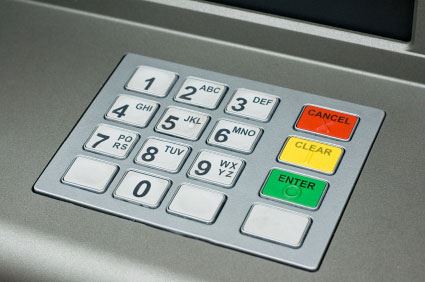
Tactile keypads are a crucial element of accessibility for people who are blind and visually impaired. Apple has shown that a touchscreen can be made accessible, but in the absence of tactile keypads, significant swaths of today’s technology and electronics are off limits to persons who cannot see, and to others with disabilities as well. As with many ubiquitous elements of the built environment, we often fail to appreciate the origins — or the originator– of the technology we rely on. This is certainly true for tactile keypads, or it was true until a fascinating obituary of John E. Karlin published in the New York Times earlier this month. Mr. Karlin deserves to be called the father of today’s tactile keypad.
Read more… Today’s Tactile Keypad: Thank you John E. Karlin
On February 12, 2013 a New York Times editorial noted that one in five consumers have confirmed errors in their credit reports. The news came from a detailed report issued in December, 2012 by the United States Federal Trade Commission and is a timely reminder about the need for everyone to check their credit reports. As a result of Structured Negotiations, free credit reports are available in Braille, Large Print, Audio CD and online in an accessible format. An accessible credit report is only a click or a phone call away. Here is the information you need to order one today.
Read more… Credit Reports Have Errors: Check Yours in an Accessible Format
Posted here is a press release announcing Bank of America’s most recent accessibility initiative — its commitment to ensure the accessibility of security features on its website and iOS mobile applications. With this release Bank of America continues its leadership role in providing digital access and usability for people with visual impairments.
Read more… Bank of America Commits to Enhanced Mobile and Web Accessibility