Book Launch Celebration!

More than 100 people gathered in Berkeley, California on October 16, 2016 to help me celebrate the publication of Structured Negotiation, a Winning Alternative to Lawsuits. The atrium at the beautiful Ed Roberts Campus was perfect place for the party. Blind activists who have helped Structured Negotiation flourish as a way to resolve legal claims without lawsuits, members of the local disability community, and friends and colleagues from so many strands of my life turned out to celebrate the book despite the first big rain of the season. Read more… Book Launch Celebration!

E*Trade Announces Accessibility Initiative

NEW YORK, JUNE 21, 2016 – E*TRADE Financial Corporation (NASDAQ:ETFC) today announced an initiative to enhance its website, mobile applications, and desktop trading and investing platforms to make them more accessible for customers with disabilities. E*TRADE worked with representatives of the blind community to enhance its platforms for traders and investors with visual impairments: Having full access to financial investing tools is important for everyone. I’m happy that E*TRADE will make its web and mobile platforms more accessible, particularly for people who are blind or partially sighted, when it comes to all aspects of trading and investing.Pratik Patel, long-time E*TRADE customer who is blind Read more… E*Trade Announces Accessibility Initiative

Bank of America Announces New Initiative for Accessible Mortgage Documents

May 4, 2016 Press Release: Bank of America announces it has begun an initiative to enhance the accessibility of its online mortgage documents for visually impaired customers. The bank worked in Structured Negotiations with Jessie Lorenz, a visually impaired customer, and with Lainey Feingold and Linda Dardarian on the initiative. Read more… Bank of America Announces New Initiative for Accessible Mortgage Documents

Houston Transit Agency Digital Access Settlement Agreement

This is the settlement agreement between Metropolitan Transit Authority of Harris County and blind transit riders about the accessibility of the agency’s website and mobile application. The authority is the regional transit operator in Houston Texas. This agreement was negotiated in Structured Negotiation; no lawsuit was filed or needed. The blind riders were represented by Christopher McGreal of Disability Rights Texas with the assistance of the Law Office of Lainey Feingold. The agency agreed to bring its digital properties into compliance with the Web Content Accessibility Guidelines 2.0, Level AA. In doing so Houston METRO, as the Authority is known, assumes a national leadership position on providing all riders with digital access. Read more… Houston Transit Agency Digital Access Settlement Agreement
More Delay for Federal Pedestrian Signal Regs

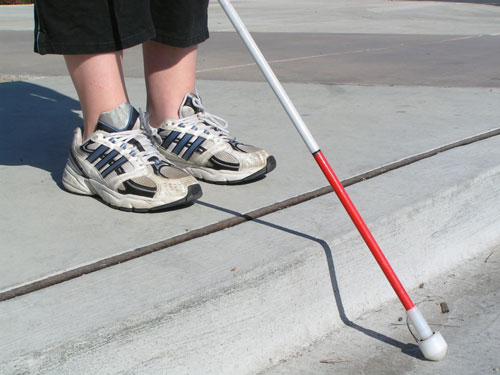
In 1999 a little known federal agency called the United States Access Board had a good idea. Nine years after passages of the Americans with Disabilities Act (ADA), the Board issued an official notice of its “intent to establish a Public Rights-of-Way Access Advisory Committee.” The committee’s job was to make recommendations for accessibility guidelines for public rights-of-way covered by the ADA. Read more… More Delay for Federal Pedestrian Signal Regs

Lainey Feingold to receive AFB Access Award

Lainey and co-counsel Lainey and co-counsel Linda Dardarian are being honored on April 4 at the 2008 National Conference of the the American Foundation for the Blind (AFB). Lainey and Linda will receive one of AFB’s three 2008 Access Awards for their pioneering work in resolving complex accessible technology claims without litigation. Technology developers Serotek and Code Factory will also receive Access Awards, and Anita Aaron, Executive Director of the San Francisco LightHouse will receive the organization’s Gallagher Award. Read more… Lainey Feingold to receive AFB Access Award

Can’t Someone Read that to You? Dissolving Stereotypes of Blindness

On June 25, 2013, the World Intellectual Property Organization (WIPO), an agency of the United Nations, reached agreement on an historic document designed to provide access to reading materials for people who are blind or have other print disabilities. The draft WIPO treaty changes copyright law to reflect that blind people need formats other than standard print in order to read. These alternative formats, or accessible formats, include Braille, audio, Large Print, accessible web content and other accessible electronic documents. The lack of accessible, available formats, and not blindness, is why blind people cannot read huge swaths of information available in standard print format. The need for accessible information has been at the core of many of the settlement agreements reached as a result of Structured Negotiations. Many of those negotiations began with stereotypes about blind people and their right, desire, and need to read independently. Read more… Can’t Someone Read that to You? Dissolving Stereotypes of Blindness

Talking Prescription Labels: Spring 2016 Update

Without accessible prescription labels, blind people are forced to guess about the medication in their prescription containers. Would a pharmacy give medication to sighted consumers without a label? Of course not. A growing number of pharmacy chains and health care organizations in the United States now offer talking prescription labels and other forms of accessible prescription information for customers who cannot read standard print. This post will give you the details. Read more… Talking Prescription Labels: Spring 2016 Update

Revised ADA Regulations (Finally) Include Detailed Talking ATM Requirements

On September 15, 2010, the United States Department of Justice published, in the Federal Register, its revised rules implementing the Americans with Disabilities Act. Official publication is one of the last steps on a very long road leading to new ADA regulations for both public and private entities on a diverse set of issues including Talking ATMs, ticketing for accessible seating, effective communication, service animals and more. The next steps? The new rules take effect on March 15, 2011 – six months after publication in the Federal Register. Compliance with the new 2010 Standards for Accessible Design (revising what is often erroneously referred to as ADAAG), is required as of March, 2012. Read more… Revised ADA Regulations (Finally) Include Detailed Talking ATM Requirements

First Addendum to MLB Settlement Agreement

The settlement posted here extends the Agreement between Major League Baseball and the American Council of the Blind and its Massachusetts and California affiliates. This is the first agreement of its kind to address the accessibility of applications for mobile devices. MLB has agreed to use the Web Content Accessibility Guidelines (WCAG) 2.0 Level AA as its standard for mobile applications, and has recently released AtBat™ for the iPhone and iPad with enhanced accessibility. Read more… First Addendum to MLB Settlement Agreement