Available Now
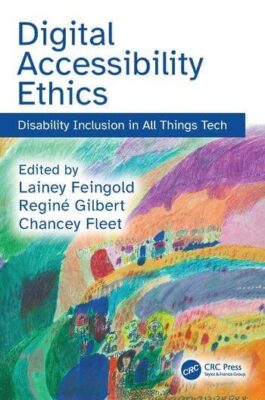
Digital Accessibility Ethics: Disability Inclusion in All Things Tech
Digital Accessibility Ethics: Disability Inclusion in All Things Tech is a groundbreaking collection of 32 chapters written by 39 disabled and nondisabled authors from 10 countries and one commonwealth. It is the first book on digital accessibility ethics and was published by CRC Press / Taylor & Francis Group on May 6, 2026.
The book introduces the Digital Accessibility Ethics Framework — an action-oriented three-part tool designed to disrupt disability exclusion in tech with values, actions and questions. The chapters apply the Framework with stories, strategies and best practices. Authors, with a combined 600 plus years of disability and accessibility experience and expertise, address the need for digital accessibility across sectors, from cybersecurity to artificial intelligence to healthcare, from practitioner burnout to voting, marketing, hackathons, publishing, and more.
Praise for Digital Accessibility Ethics
… a masterclass in digital accessibility offering a pioneering Digital Accessibility Ethics Framework. A must-read for anyone who is involved in the design, procurement, or use of digital technologies — ie, everyone.
…. gives practitioners, researchers, and organizations a practical roadmap for embedding accessibility into everyday digital decisions.
… a timely, much needed ethical framework that moves beyond narrow legal and cost-benefit approaches. An important read for all!
Book Talks, Workshops and Events
Editors and authors of Digital Accessibility Ethics: Disability Inclusion in All Things Tech are available to speak with audiences about the digital accessibility ethics framework and any of chapters in the book in a variety of settings. We are available for conference keynotes, team trainings, book clubs, workshops, classroom visits, and of course, book talks and signings. The Events page lists what is coming up, what has happened already, and how to bring digital accessibility ethics to your organization.
Resources
The editors and authors of the digital accessibility ethics book are developing articles, handouts, and worksheets to help you bring Digital Accessibility Ethics Framework to you work and community
Editors and Authors
39 authors contributed to Digital Accessibility Ethics, including the book’s three editors. We come from 10 countries and 1 commonwealth. We are disabled and non-disabled. Together, we have over 600 years of experience in digital accessibility and disability advocacy.
We are doctors and game developers, cybersecurity professionals and inventors, audio describers, marketing specialists, and professors. We are accessibility consultants, designers, developers, non-profit leaders, public policy experts, lawyers and publishing professionals.
Table of Contents
The book begins with an Introduction titled The Digital Accessibility Gap and the Need for an Ethics Framework. Three sections follow.
- Section One — Foundation
- Section Two — Ethical Accessibility Practices
- Section Three — Digital Accessibility Belongs in Ethics Across Sectors
The Conclusion asks What's Next for Digital Accessibility Ethics? and offers practical suggestions for implementing and growing the Framework.
Summary
This page has information about a new book called Digital Accessibility Ethics: Disability Inclusion in All Things Tech. Lainey Feingold, Reginé Gilbert, and Chancey Fleet are the co-editors of the book. They each also wrote chapters.
There are 32 chapters in the book written by 39 authors from 10 different countries. Some are disabled and some do not have a disability. The book talks about why digital accessibility must be part of everyone’s ethics. The page has links to learn more about the authors. There is also a link to the Table of Contents and to a page to read what people say about the book. You can find out about book events here.