Media
Interviews, podcasts, webinars, and press coverage about Digital Accessibility Ethics.
Accessibility Level Up: the Digital Accessibility Ethics Framework (Workday)
Are you treating accessibility as a checklist? Or as a reflection of your values? In this session, Mary Roemmele, Sr Director of Product Accessibility at Workday, is joined by disability rights lawyer, author, and accessibility leader Lainey Feingold to explore the Digital Accessibility Ethics Framework: a values-driven approach to building more inclusive digital products and experiences. Join Mary and Lainey as they examine how dignity, privacy, inclusion, fairness, accountability, and harm reduction can guide better decisions across accessibility, AI, and emerging technology.
Should digital accessibility be considered an ethical imperative? (The Compliance and Ethics Blog)
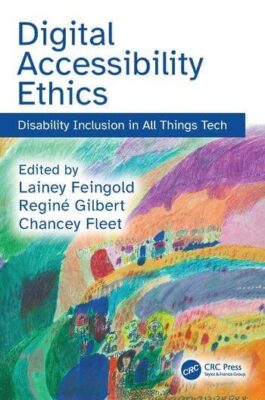
What does digital accessibility have to do with an organization's ethics program? Lainey Feingold's answer starts with who gets left out: "Quite simply, without digital accessibility, disabled people are excluded." In this piece for the Society of Corporate Compliance and Ethics (SCCE), Lainey explains why accessibility belongs at the heart of organizational ethics, not only legal compliance. She shows how the Framework from Digital Accessibility Ethics: Disability Inclusion in All Things Tech connects accessibility to an organization's values. She also covers organizational culture, what full digital accessibility looks like, and why commitment is an early step, maybe the first. Accessibility works best when it is built into technology, content, and processes from the start.
Design as an Act of Inclusion (Talk Cocktail Podcast with Jeff Schechtman)
The digital world is being rebuilt around AI, and for the first time in a generation the concrete of that world is still wet. Lainey Feingold thinks that's the opportunity! Technology can now read any text aloud, describe any image, caption any voice in real time — the most powerful equalizer disabled people have ever had, if it's designed in rather than bolted on. Feingold, a disability rights lawyer who won talking ATMs and accessible banking without ever filing a lawsuit, has gathered thirty-nine authors from ten countries into Digital Accessibility Ethics. Their case: build for the person at the edge and everyone gets a better product. Who do we decide to build for?
A framework for making tech more accessible to all (Texas Standard Public Radio)
Most people can agree that accessible technology is a good thing — even an essential thing. Accessibility allows people with a variety of disabilities to use the web, apps or other digital tools required to do one’s job, attend school and perform life tasks. But what’s actually needed to make full inclusion happen, and what can organizations do to make it happen? These are a few of the questions at the heart of “Digital Accessibility Ethics: Disability Inclusion in all Things Tech,” a new book written and edited by experts in the field, respresenting many disabilities and many parts of the world.
Beyond the Checklist: Why Digital Accessibility is an Ethical Imperative
Digital accessibility is often framed as a technical hurdle or a legal box to check. But for disability rights lawyer and author Lainey Feingold, it is something much deeper: a fundamental ethical choice. In this conversation with Sam Ogami, an Accessibility Product Manager at Workday, Lainey discusses the upcoming book Digital Accessibility Ethics: Disability Inclusion in All Things Tech (Scheduled for release May 2026), the global shift in accessibility law, and why including people with disabilities in the design process is the only way to build a truly secure and equitable future.